Google AI Overviews vs. ChatGPT vs. Perplexity: What Local Service Businesses Need to Optimize For
Engine-specific differences and clear prioritization guidance so plumbers, HVAC techs, roofers, and local trades stop guessing which AI signals matter most.
Table of Contents
- Why the Same Business Looks Completely Different Across AI Engines
- Google AI Overviews: What It Prioritizes for Local Service Businesses
- ChatGPT: Why It Is the Most Selective (and What It Actually Needs)
- Perplexity: Live Crawl, Citations, and Review-Platform Strength
- Side-by-Side Comparison — Signals That Matter Most for Each Engine
- Prioritization Guide: What a Busy Trade Owner Should Do First
- In My Experience: How Engine Differences Change the Optimization Order
- Putting It Together — Shared Foundations + Engine-Specific Moves
Why the Same Business Looks Completely Different Across AI Engines
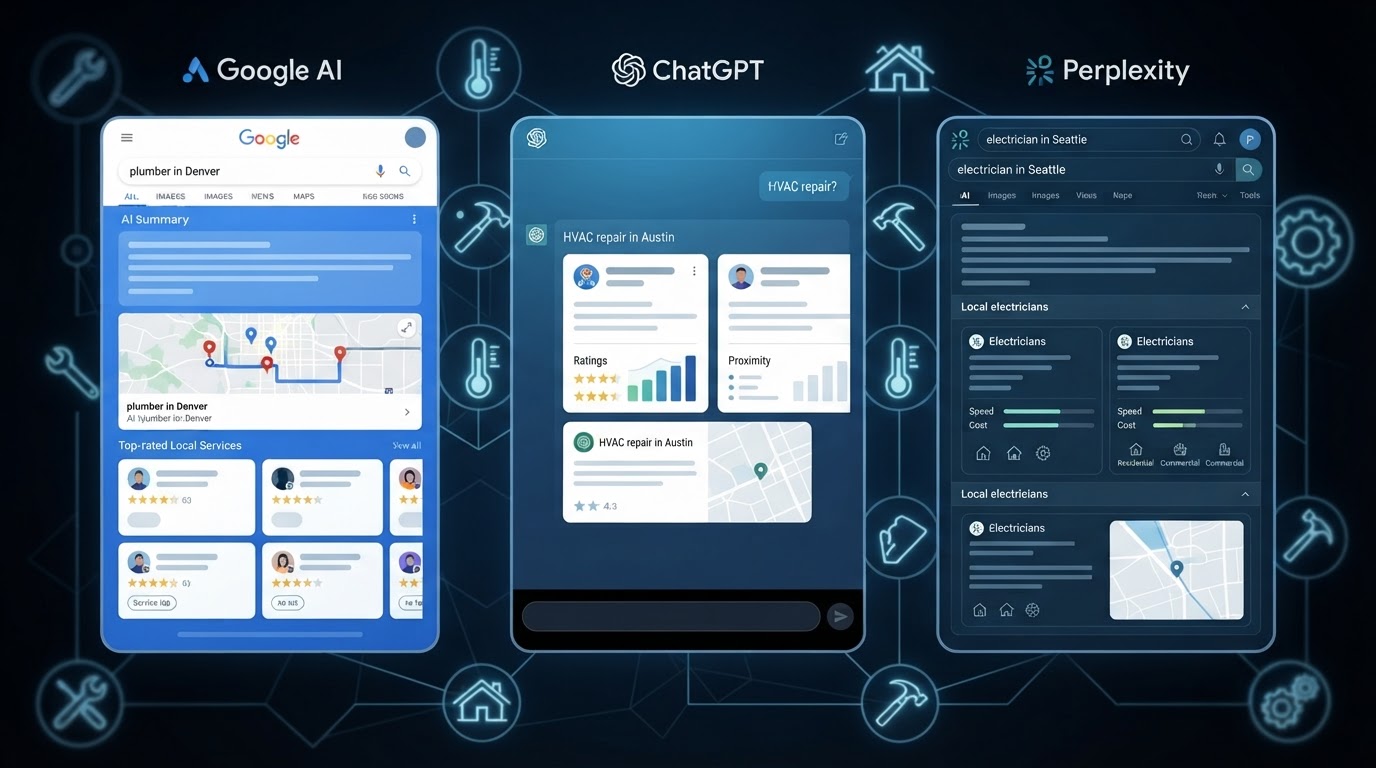
When a homeowner asks "best emergency plumber near me" or "reliable HVAC company in [city]," the three major AI surfaces often return different names. This is not random. Each engine retrieves and weights information differently.
2026 research quantifies the gap. According to the SOCi Local Visibility Index and related studies, ChatGPT recommends only about 1.2% of studied local business locations, Perplexity around 7.4%, and Gemini roughly 11%, while the same brands appear in Google's local 3-pack approximately 35.9% of the time. Google AI Overviews appear frequently on local and service queries and draw heavily from Google's own ecosystem.
Understanding these differences lets you stop treating "AI search" as one channel and start allocating limited time to the highest-leverage actions for each engine.
Google AI Overviews: What It Prioritizes for Local Service Businesses
Google AI Overviews synthesize answers primarily from Google's index, Knowledge Graph, Google Business Profile, Maps data, and verified reviews. Because they sit on top of the existing Google search ecosystem, the work you have already done for local pack visibility (complete GBP, consistent NAP, review velocity, LocalBusiness schema, clear service pages) provides the strongest foundation.
AI Overviews appear on a substantial share of relevant queries and often include local business information alongside or above traditional results. For most local service businesses, this remains the highest-volume AI surface and the one where existing SEO investments pay the most immediate dividends.
Key levers for Google AI Overviews:
- Fully optimized and active Google Business Profile
- Consistent NAP and entity data across the web
- Strong, recent Google reviews
- LocalBusiness + Service + FAQPage schema
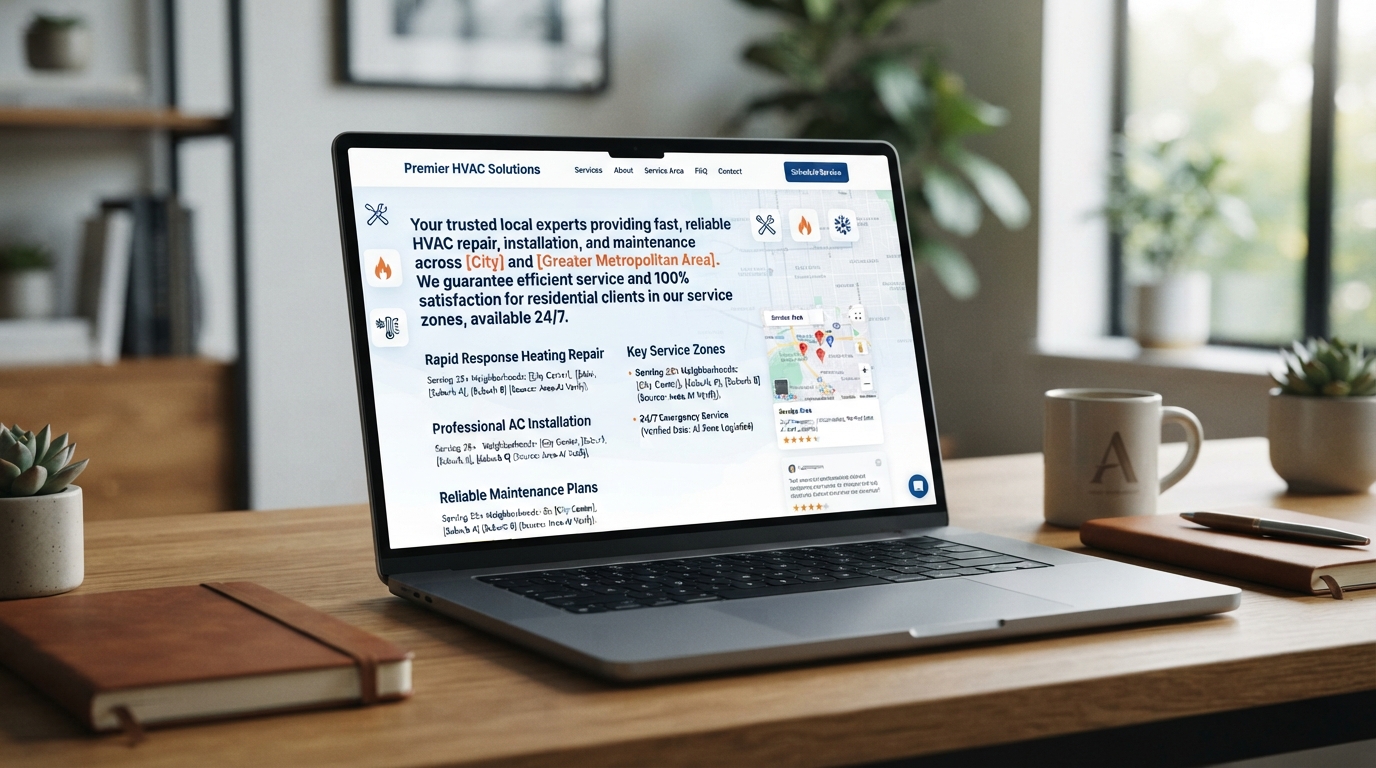
- Clear, answer-first service pages that rank in traditional Google results
ChatGPT: Why It Is the Most Selective (and What It Actually Needs)
ChatGPT's local recommendations have historically drawn heavily from sources such as Foursquare and other directory data, supplemented by web browsing and Bing-index signals. It is far less likely than Google to recommend a business simply because that business ranks well in the Google local pack. Studies consistently show it recommends only a very small percentage of eligible local businesses.
Because ChatGPT is selective, it rewards businesses that present a clear, consistent entity across multiple sources it trusts. Strong Google presence helps, but it is rarely sufficient on its own. Directory completeness, third-party mentions, review profiles on platforms beyond Google, and clear structured data on your own site all increase the chance the model can confidently name you.
Key levers for ChatGPT visibility:
- Entity consistency (identical name, address, phone, services) across major directories
- Presence and completeness on platforms that feed local data (including those beyond Google)
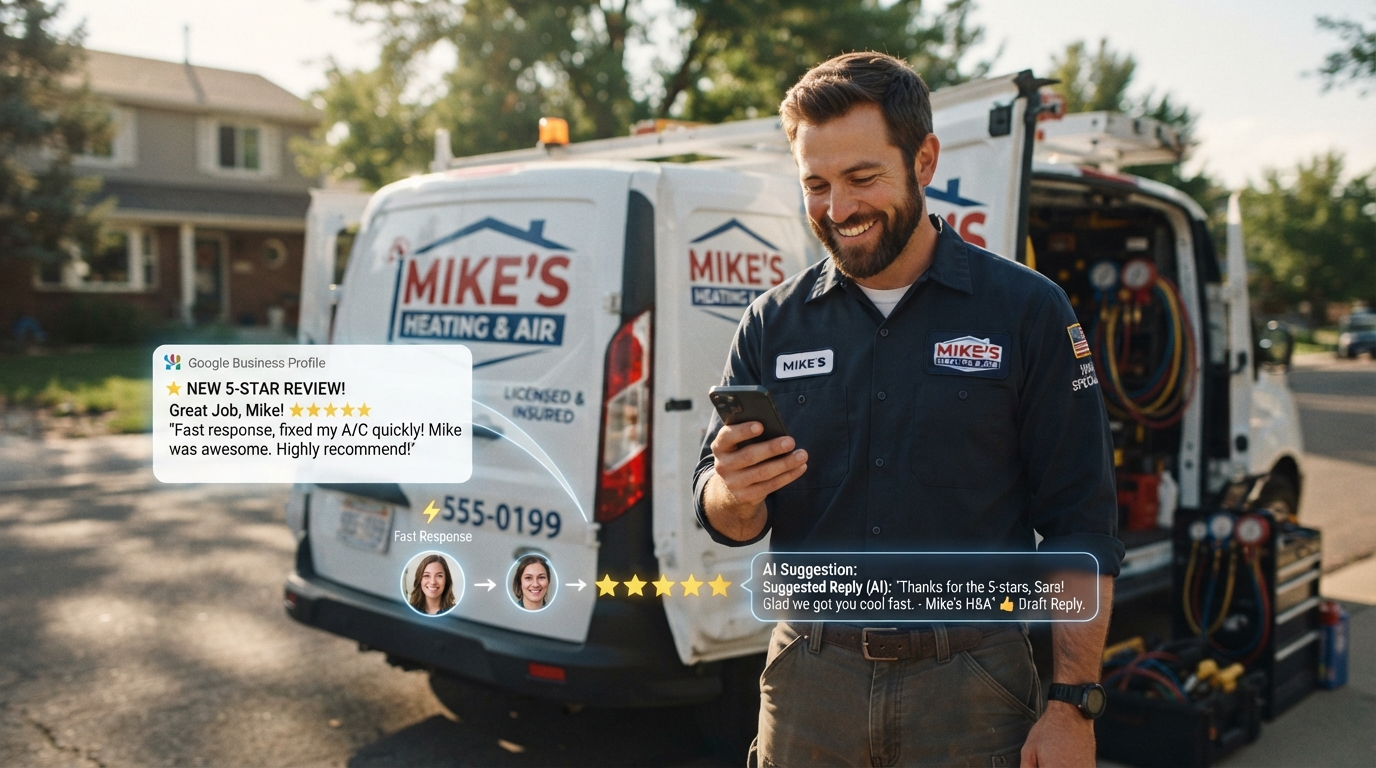
- Detailed, specific reviews and owner responses
- Clear, authoritative content and schema on your website
- Third-party corroboration (local press, associations, consistent citations)
Perplexity: Live Crawl, Citations, and Review-Platform Strength
Perplexity runs its own retrieval process and tends to cite sources more explicitly than ChatGPT. For local queries it leans on live crawls plus strong review and directory platforms. Freshness matters — content and signals that are current perform better. Businesses with clean, up-to-date profiles on the platforms Perplexity frequently references, plus well-structured pages that are easy to extract answers from, have a clearer path to inclusion.
Key levers for Perplexity:
- Strong, accurate profiles on major review and directory platforms (especially those with high local citation share)
- Fresh, answer-first content that is easy to crawl and cite
- Consistent entity data and schema
- Recent review activity and specific language in reviews
Side-by-Side Comparison — Signals That Matter Most for Each Engine
| Factor | Google AI Overviews | ChatGPT | Perplexity |
|---|---|---|---|
| Primary data lean | Google ecosystem (GBP, Maps, Knowledge Graph) | Directories, Bing index, third-party corroboration | Live crawl + review platforms (Yelp etc.) |
| Selectivity for local | Highest frequency among the three | Most selective (~1.2%) | Moderate (~7.4%) |
| Transfer from traditional local SEO | Strongest | Partial | Partial |
| Key optimization focus | GBP completeness, reviews, schema, rankings | Entity consistency, multi-platform presence, authority | Fresh citable content, review platforms, clarity |
Prioritization Guide: What a Busy Trade Owner Should Do First
- Lock down the Google foundation first — Complete and actively manage your Google Business Profile, fix NAP consistency, strengthen Google reviews, and implement solid LocalBusiness + Service + FAQPage schema. This directly supports Google AI Overviews (the highest-volume surface) and still contributes to the other engines.
- Build multi-platform entity consistency — Ensure your name, address, phone, hours, and services match across the major directories and platforms that feed ChatGPT and Perplexity data. Inconsistencies reduce confidence across all engines.
- Increase review velocity and specificity — Systematic post-job review requests produce the fresh, detailed evidence all three engines value. Focus on quality and recency, not just volume.
- Create or tighten answer-first service pages — Clear, extractable content helps every engine, especially Perplexity's live crawl and ChatGPT's need for unambiguous information.
- Measure and iterate — Use the free NSiTZ AI Readiness Scan plus manual prompt tests across the three engines every 30–60 days.
This sequence respects the reality that most local service businesses already have some Google presence and can improve the highest-volume AI surface first, while systematically closing the gaps that keep them invisible in ChatGPT and Perplexity.
In My Experience: How Engine Differences Change the Optimization Order
Owners who treat all AI engines as identical waste effort. The ones who win start by making their Google Business Profile and core entity data airtight — that immediately improves Google AI Overviews and creates a cleaner base for everything else. They then deliberately strengthen the directory and review signals that ChatGPT and Perplexity lean on more heavily. The result is progressive visibility gains across surfaces instead of frustration that "AI still doesn't know us" despite decent Google rankings. Engine-specific prioritization turns a confusing landscape into a manageable sequence of actions.
Putting It Together — Shared Foundations + Engine-Specific Moves
Google AI Overviews reward the local SEO work many trades already understand. ChatGPT demands broader corroboration and higher confidence thresholds. Perplexity rewards freshness, clear citations, and strong review-platform presence. Optimize the shared layer first, then layer on the distinctive signals each engine weights most heavily.
When an AI engine does recommend you, the lead still has to be answered in seconds. That is where a 60-second automated follow-up system turns visibility into booked jobs.
Stop Guessing Which AI Signals Matter
Run the free AI Readiness Scan, follow the prioritization order above, and connect better multi-engine visibility to actual booked work with a system built for trades.
Get Your Free AI Readiness Scan Book a Free Demo See How NSiTZ WorksRelated resources: Lead Loss Calculator · Pricing · House Cleaning Systems · Landscaping Automation
Tags:
Want these results for your business?
Let's build a custom automated follow-up system for your operation.
Book a Free Strategy CallRelated Articles